Private Bank - Gemini
About Project
A unified experience for personal and business accounts across web and mobile
Overview
Gemini was a foundational platform initiative to support Citizens Bank’s expansion into private banking following its 2022 acquisitions.
These acquisitions introduced a new class of high-net-worth clients with complex financial relationships spanning personal, business, and wealth accounts. However, the existing platform was not designed to support this level of complexity.
I led the design of a unified platform experience across web and mobile, redefining how users manage multi-entity financial relationships under a single login and establishing scalable patterns for permissions, visibility, and personalization.
This work established the foundation for Citizens’ Private Banking platform, enabling unified multi-entity financial management for high-net-worth clients.
Scope
- Platform: Web + Mobile
- Users: High net worth private banking clients
- Focus: Multi-business account management, permissions, and personalization
The Problem
Citizens’ existing platform was not designed to support the complexity of private banking clients.
Users were required to:
- Maintain separate logins for personal and business accounts
- Navigate fragmented experiences across account types
- Manually switch contexts to access different financial products
This model worked for retail banking but broke down at the private banking level, where clients often:
- Own multiple businesses
- Manage dozens or even hundreds of accounts
- Require delegated access and complex permission structures
These limitations created significant friction for high-value clients and prevented the bank from delivering the level of service expected in private banking.
More importantly, the platform itself was not structured to support this level of complexity. Core assumptions, such as account-level access and isolated user relationships, needed to be redefined.
Without addressing these foundational constraints, Citizens would not be able to scale its private banking offering or fully realize the value of its recent acquisitions.
My Role & Ownership
I led the design of the Private Banking platform experience as the primary product designer on the Trailblazers team experience, driving both product direction and system-level design across private banking initiatives.
My role extended beyond UX execution into strategic and cross-functional leadership, where I:
- Defined how multi-entity financial relationships should be structured across users, businesses, and accounts
- Influenced backend architecture, including data modeling, API structure, and system behavior
- Partnered closely with engineering, product, and stakeholders to align on scalable solutions across the platform
- Helped shape roadmap decisions, balancing immediate delivery needs with long-term system scalability
- Led design efforts across multiple phases of the initiative, from early concepting through ongoing platform expansion
As the initiative scaled, I became a key point of knowledge for private banking across teams, guiding new designers and influencing decisions across multiple workstreams.
Constraints
Designing Gemini required balancing user experience improvements with significant system and organizational constraints:
- Legacy backend systems that were not originally designed to support multi-entity account relationships
- Complex account structures, including personal accounts, multiple businesses, and delegated access
- Permission and role logic, requiring clear rules for what users could see and act on
- Need for web and mobile parity, ensuring a consistent experience across platforms
- High expectations from private banking clients, where usability and trust are critical
These constraints required close collaboration with engineering to shape both the frontend experience and the underlying system behavior.
Key Product Decisions
1. Redefine the platform around a multi-entity system to support scalable financial relationships
Citizens’ platform was originally designed around a single-account model, where users interacted with accounts in isolation. This approach broke down for private banking clients managing multiple businesses, each with its own set of accounts.
To address this, I defined a hierarchical system model structured around user → business → accounts, shifting how the platform organizes and exposes financial data.
This enabled:
- Access to multiple businesses under a single login
- Clear relationships between users, businesses, and accounts
- A scalable foundation capable of supporting both simple and highly complex financial structures
By restructuring the platform at a system level, this work established the foundation for private banking and enabled Citizens to support significantly more complex client relationships than previously possible.
This shift required redefining both the user experience and the underlying system behavior that drives account relationships across the platform.
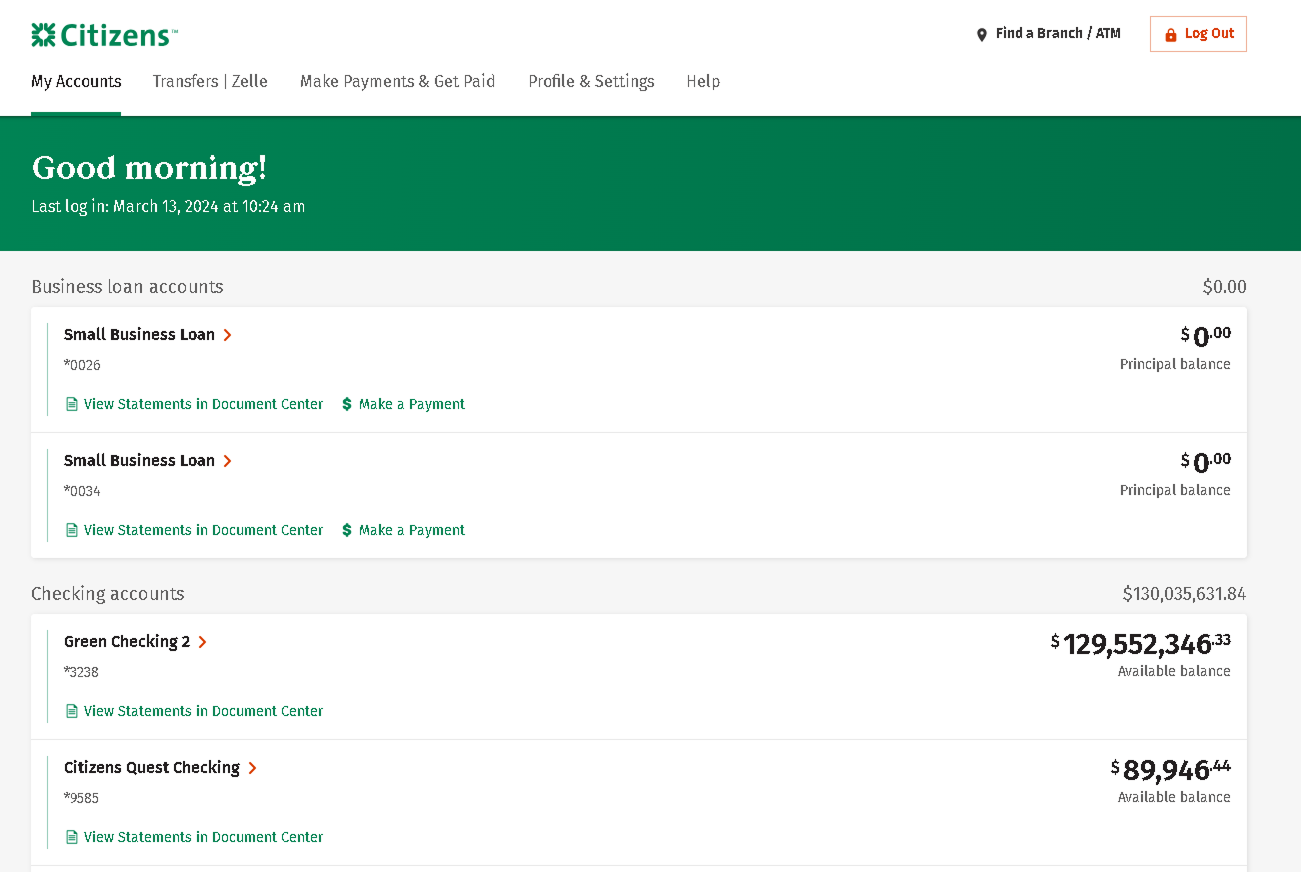

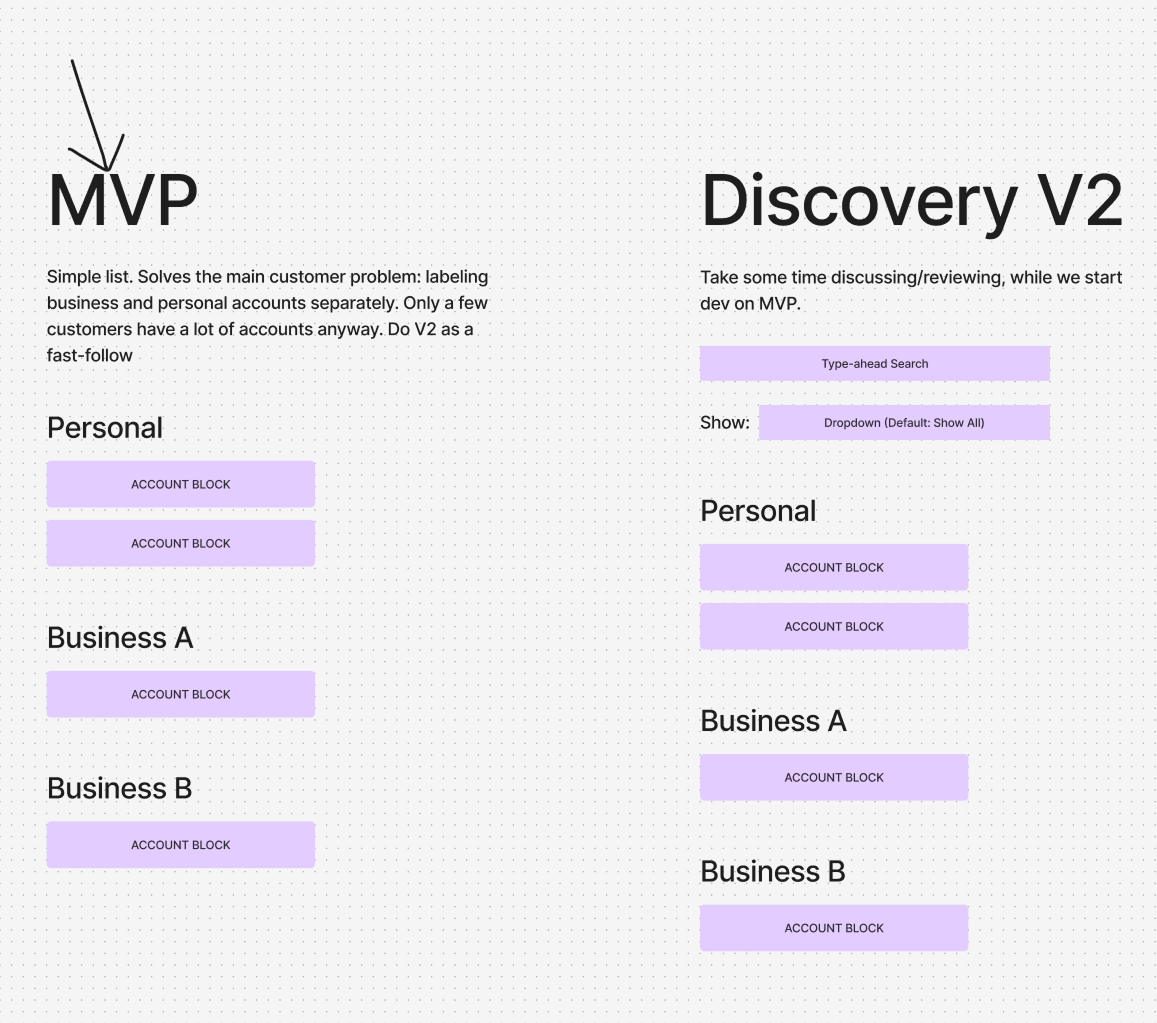


This shift required redefining both the user experience and the underlying system behavior that drives account relationships across the platform.
2. Simplify multi-business navigation to reduce friction while supporting high-complexity user scenarios
Previously, users with multiple businesses were required to log in separately to access each one, creating significant friction in high-value workflows.
I redesigned the navigation model to support a unified experience where users can access all businesses within a single session, while streamlining how they interact with accounts.
This included:
- Enabling access to multiple businesses without requiring separate logins
- Simplifying account selection through contextual dropdowns tied to user actions
- Designing navigation patterns that scale from common use cases (2–3 businesses) to complex scenarios (25+ businesses with dozens of accounts)
By reducing context switching and aligning navigation with user intent, the experience became significantly more efficient while still supporting the needs of high-complexity users.
This approach ensured the system remained usable for both everyday users and power users managing large financial portfolios.
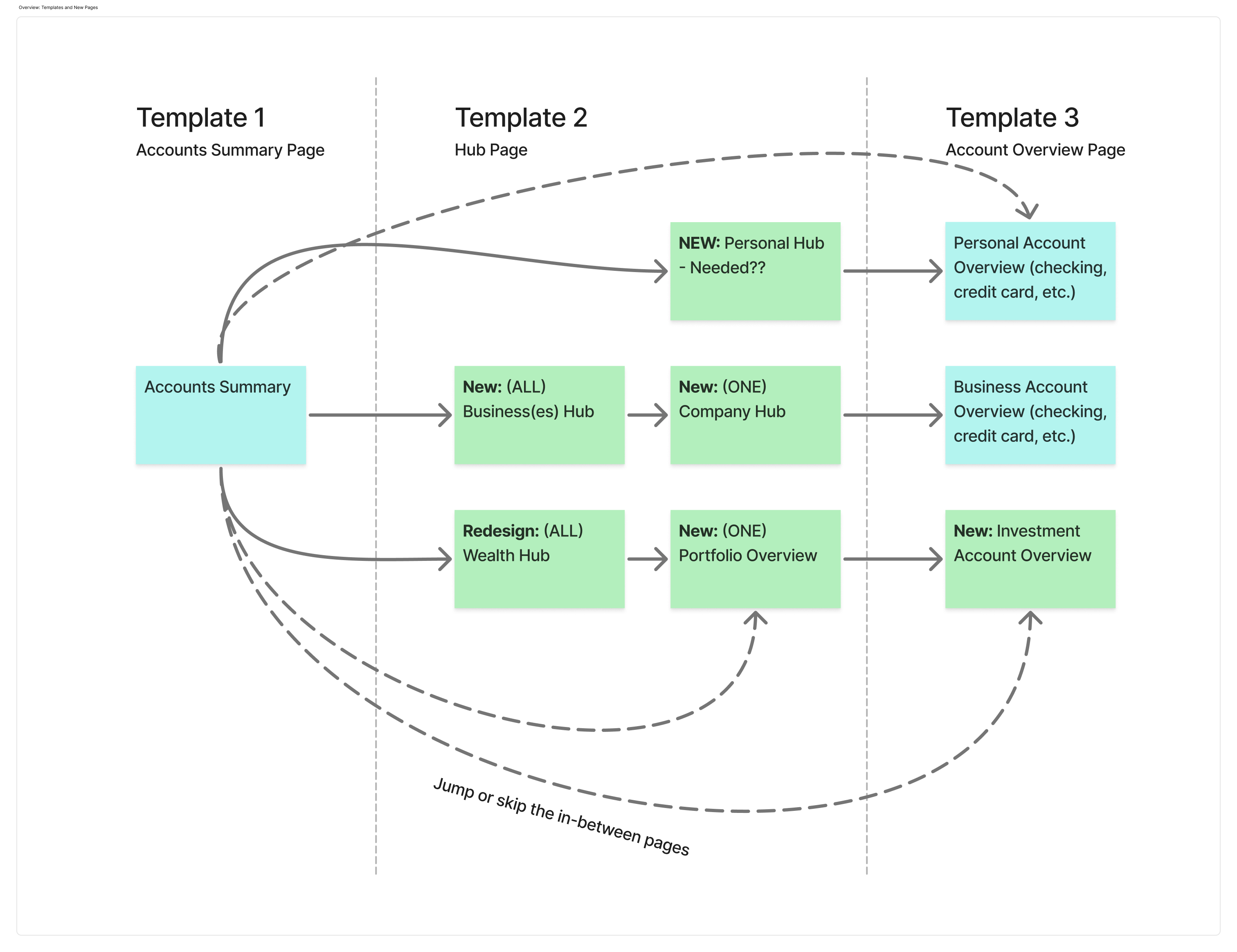
Final Interaction: Dropdown interaction states for efficient account selection within complex financial structure


3. Design a scalable permissions model to support complex business and account relationships
The existing permissions system was limited in flexibility, primarily operating at a global or account level. This approach worked for simpler use cases but broke down for private banking clients managing multiple businesses with varying levels of access across users and delegates.
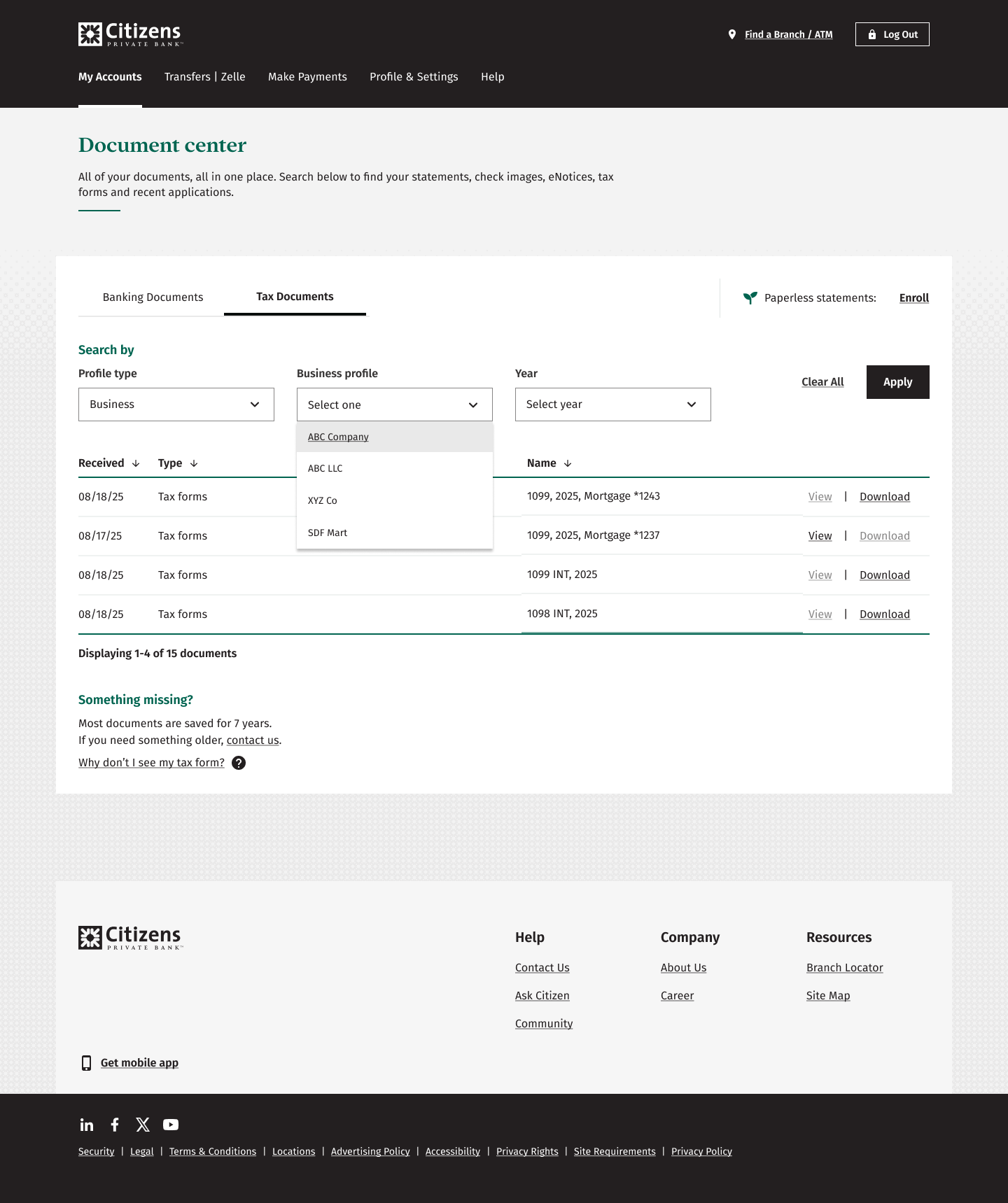
To address this, I defined a scalable permissions model that supports both business-level and account-level access, enabling flexible control across complex financial relationships.
This included:
- Supporting permissions at the business level for broader access across entities
- Allowing granular control at the account level for more specific use cases
- Designing workflows for assigning and managing permissions across users and delegates
This model enables organizations to manage access more effectively while maintaining the flexibility required for complex financial structures.
Designing permissions required defining how roles, rules, and access interact across the entire platform.
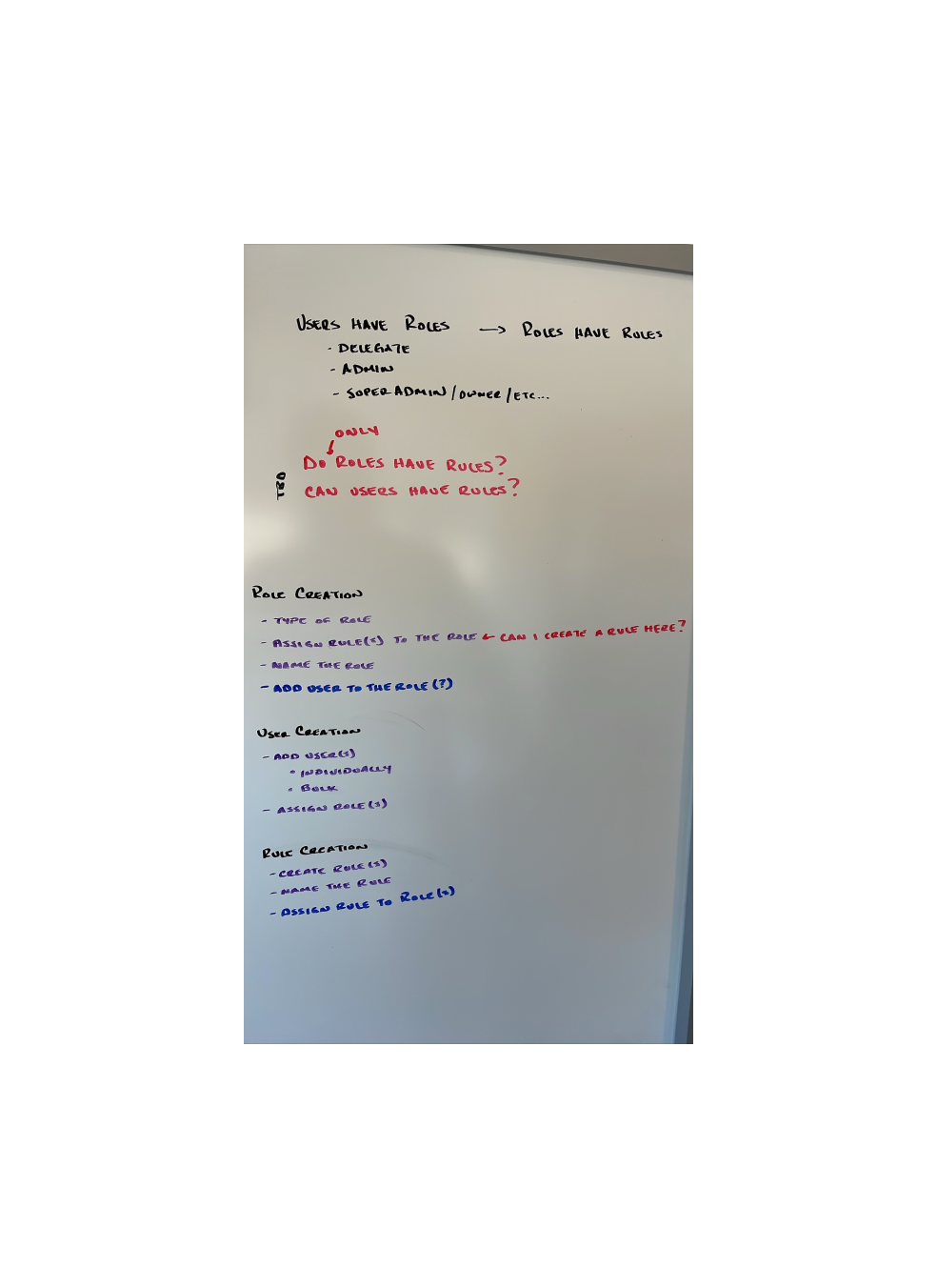
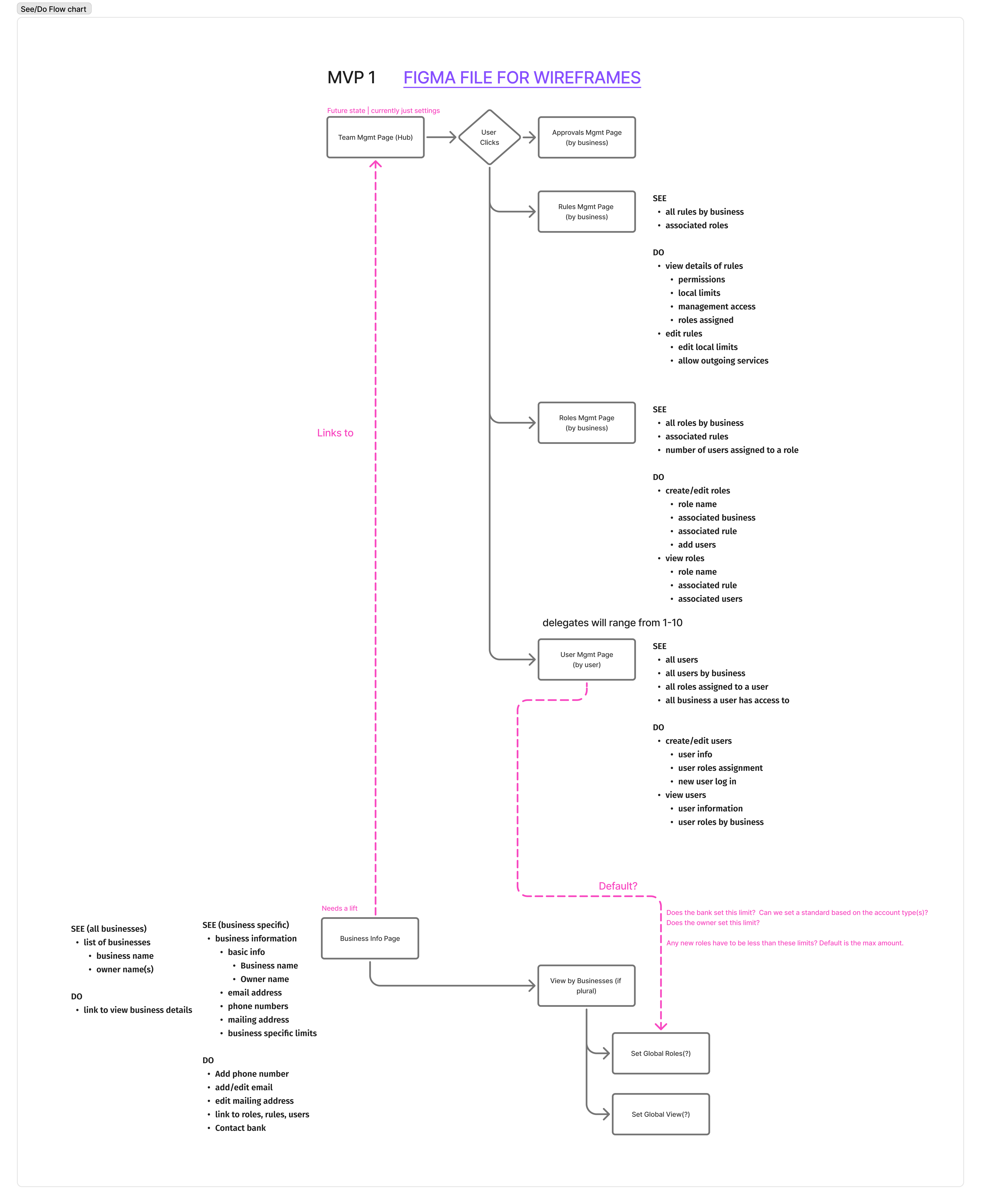


Configuring access rules at both business and account levels to support flexible permission structures.


This approach ensures the system can scale across both simple and highly complex organizational structures without introducing unnecessary friction.
4. Designing for extreme edge cases while maintaining usability for everyday users
Private banking introduces significantly more complex user scenarios than traditional retail banking.
While most users manage a small number of accounts, others—such as family offices—may manage:
- 25–100 businesses
- 25–50 accounts per business
- Hundreds of accounts across their portfolio
Designing only for the average user would result in a system that breaks down under these high-complexity scenarios.
To address this, I designed the system to scale across both simple and extreme use cases by:
- Establishing clear hierarchy and grouping across businesses and accounts
- Ensuring navigation patterns remain consistent regardless of scale
- Designing interactions that support both quick access and deep exploration
By solving for the most complex scenarios, the system naturally supports simpler use cases without requiring separate experiences or added customization.


Designing for the most complex scenarios ensured the platform remained resilient and adaptable as user needs evolved.
5. Balance short-term delivery with long-term platform scalability
Given the scope of the initiative, not all functionality could be delivered at once. The platform required foundational changes to support private banking, but business needs demanded incremental progress.
To address this, I worked closely with product and engineering to define a phased approach that balanced immediate delivery with long-term system goals.
This included:
- Prioritizing foundational system changes that would enable future capabilities
- Defining what could be included in early releases versus later phases
- Managing tradeoffs between usability, complexity, and development constraints
This approach ensured that early releases delivered meaningful value while establishing a scalable foundation for continued platform growth.
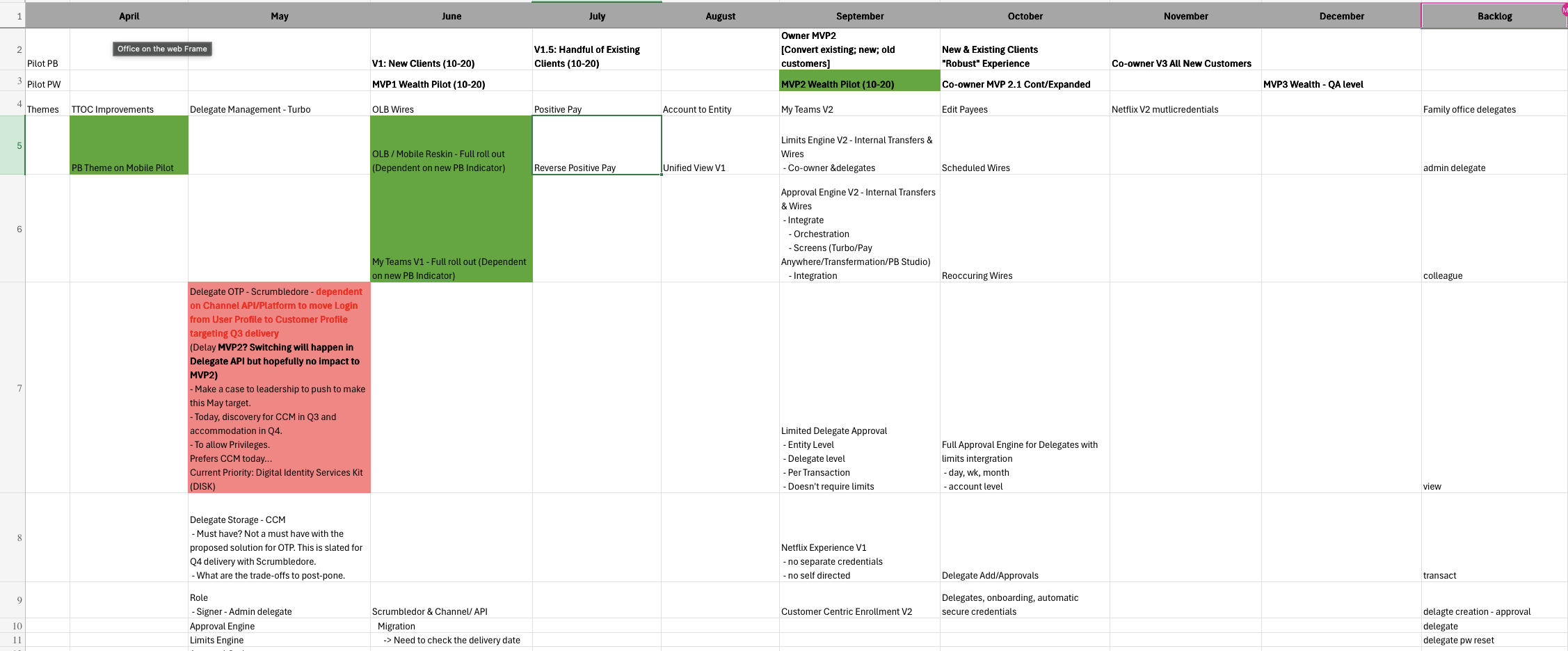
This approach helped align stakeholders across teams while ensuring the platform could evolve without requiring costly rework.
System-Level Impact
This work fundamentally changed how the Citizens platform supports financial relationships.
By shifting from isolated account access to a unified, multi-entity system, the platform now enables users to manage personal, business, and wealth accounts within a single experience. This not only simplifies the experience for private banking clients but also establishes a scalable foundation for future platform growth.
These system-level changes extend beyond private banking, influencing how the broader platform handles account relationships, permissions, and cross-entity interactions across all user types.
This work not only enabled Private Banking but also influenced how the broader Citizens platform approaches account relationships, permissions, and multi-entity experiences.
Explore Other Works


